
A lot of people think they need big ideas, big money, and big plans to start.
But most successful businesses didn’t start big.
They started small — and smart.
- Small Starts Remove Pressure
Starting big can feel overwhelming.
- Too many things to figure out
- Too much risk
- Too much fear of failure
But when you start small, it feels manageable.
And when it feels manageable — you actually start.
- Small Lets You Learn Fast
You don’t need a perfect plan.
You need real experience.
Starting small helps you:
- test your idea
- understand customers
- learn what works
Mistakes become lessons — not losses.
- Small Builds Confidence
Big goals can feel intimidating.
But small wins build belief.
- First customer
- First sale
- First positive feedback
These moments give you confidence to keep going.
- You Can Grow Over Time
Starting small doesn’t mean staying small.
It means starting where you are.
- A small snack hustle → full tuckshop
- Tutoring one student → tutoring group classes
- Selling notes → building a study platform
Growth happens step by step.
- Action Beats Overthinking
Many people delay because they want everything ready.
But starting small allows you to move now.
You don’t need:
- perfect branding
- lots of money
- everything figured out
You just need to begin.
This Week’s Challenge
Ask yourself:
- What small idea can I start this week?
- What resources do I already have?
- Who can I serve right now?
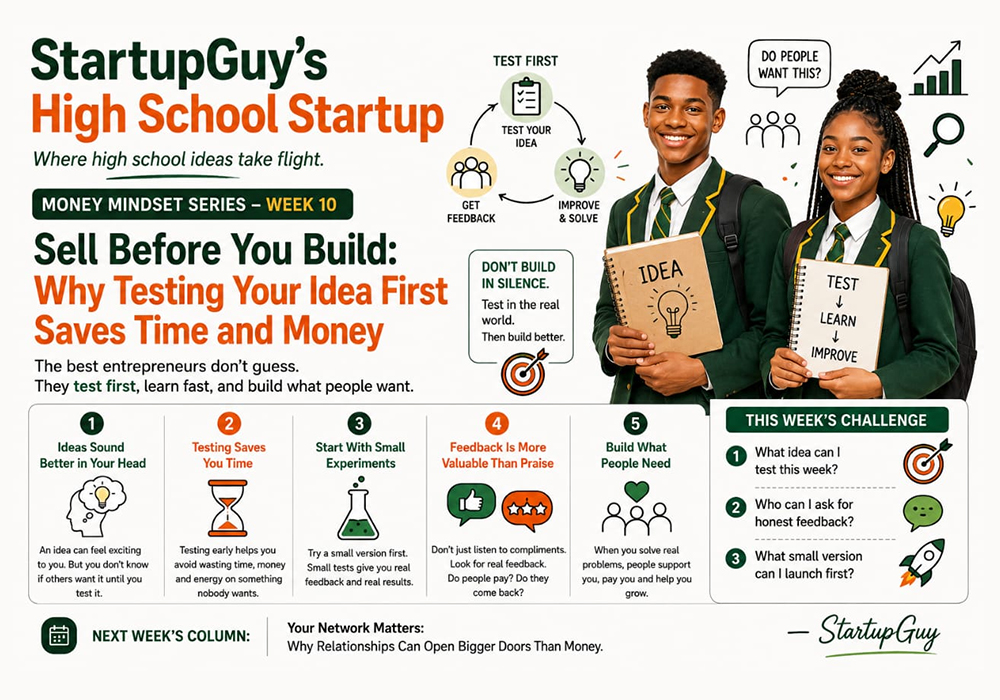
Next Week’s Column
“Sell Before You Build: Why Testing Your Idea First Saves Time and Money.”
Because smart entrepreneurs validate before they invest.